“Are you paying
attention? Good. If you're not listening carefully, you will miss things.
Important things. I will not pause, I will not repeat myself, and you will not
interrupt me.”
 With lead actor
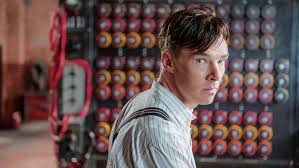
Benedict Cumberbatch playing code-breaking mastermind Alan Turing, The Imitation Game is a touching tribute
to an extraordinary man and his team. This film is, without a doubt, a rich piece
that combines the suffering, heartbreak, and victory of war. The film is
carefully crafted – as the literary development that takes place within the
film is linked with a combination of both dramatic and cinematic elements.
Blending these elements together allows the film to speak and break through to
the audience on multiple levels.
With lead actor
Benedict Cumberbatch playing code-breaking mastermind Alan Turing, The Imitation Game is a touching tribute
to an extraordinary man and his team. This film is, without a doubt, a rich piece
that combines the suffering, heartbreak, and victory of war. The film is
carefully crafted – as the literary development that takes place within the
film is linked with a combination of both dramatic and cinematic elements.
Blending these elements together allows the film to speak and break through to
the audience on multiple levels.
The moment the film
began, I was enraptured by the non-diegetic piano notes that planted a
sensation of suspense and curiosity within me – before I even understood what
was happening. Benedict Cumberbatch’s gravely deep voice provides us with voice-over
narration through a series of cuts that pan over an amalgam of peculiar looking
objects. At once, the film uses a combination of auditory elements and visual
imagery to draw us into what is happening; I wanted to know what was going to
happen next. The director’s choice of lighting and color throughout the
introduction of the film is interesting; the shots take place with
 low key lighting
accompanied by neutral lighting shots sometimes (but even then, they are
filtered to appear darker and more ominous). Color is rare, and surrounded by
dull shades of blue, brown, grey, and black. This automatically told me that this film was not meant to be a happy victory; rather, that it would involve a
complex plotline of mood changes and ethical dilemmas. Most noticeably, the
introduction of the film was greatly representative of capturing the mood of
the entire film: suspenseful, dramatic, dark, poignant.
low key lighting
accompanied by neutral lighting shots sometimes (but even then, they are
filtered to appear darker and more ominous). Color is rare, and surrounded by
dull shades of blue, brown, grey, and black. This automatically told me that this film was not meant to be a happy victory; rather, that it would involve a
complex plotline of mood changes and ethical dilemmas. Most noticeably, the
introduction of the film was greatly representative of capturing the mood of
the entire film: suspenseful, dramatic, dark, poignant.
There are so many
aspects of this film that deserve recognition; it is hard to identify which few
are worth mentioning in this review. So let me start with lead character Alan
Turing (played by Benedict Cumberbatch) himself. What is it about his character
that makes us root for him? How does the film make us empathize for an
individual who begins by appearing so fixated on the logical that he forgets
what is moral? The director makes key
decisions that are directly related to our relationship with Turing himself –
we become a part of his story just as much, if not more, than Joan, Hugh, John,
and Peter. This is primarily done through a series of flashbacks that take
place throughout the film, instances in which we are able to access the areas
of Turing’s mind that the others are unable to see.
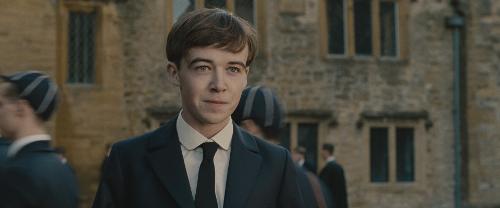 Sometimes, these flashbacks
are accompanied by Turing’s voice over narration, describing how he saw the
world and what he learned from his observations. These flashbacks engage us
through the simple use of camera angles, lighting, and sound. The flashbacks
often feature a change in lighting and filter, indicating a time in which
Turing had something he does not have now (we find that this ‘thing,’ is more a
person (Christopher) as the film progresses). When Turing is trapped underneath
the floorboards, he struggles for freedom in the dark (although there is some
side lighting) and Christopher is able to remove the dark and literally and
metaphorically bring light into his life. When young Turing reads Christopher’s
letter, we view him from a low angle and full frontal lighting. These function
to illustrate Turing’s newfound sense of empowerment and genuine happiness due
to Christopher’s presence in his life. Thus, when we return from these
flashbacks to his current state of life we cannot help but root for the socially
awkward genius.
Sometimes, these flashbacks
are accompanied by Turing’s voice over narration, describing how he saw the
world and what he learned from his observations. These flashbacks engage us
through the simple use of camera angles, lighting, and sound. The flashbacks
often feature a change in lighting and filter, indicating a time in which
Turing had something he does not have now (we find that this ‘thing,’ is more a
person (Christopher) as the film progresses). When Turing is trapped underneath
the floorboards, he struggles for freedom in the dark (although there is some
side lighting) and Christopher is able to remove the dark and literally and
metaphorically bring light into his life. When young Turing reads Christopher’s
letter, we view him from a low angle and full frontal lighting. These function
to illustrate Turing’s newfound sense of empowerment and genuine happiness due
to Christopher’s presence in his life. Thus, when we return from these
flashbacks to his current state of life we cannot help but root for the socially
awkward genius.
The film’s historical
setting indicates that the Second World War is a huge part of defining the
film. This is apparent through the multiple instances of cross-cutting that
takes place between Alan’s personal interactions and those going on throughout
the duration of the war. This cross-cutting serves to remind the audience that
the war is still going, and that bloodshed is still occurring. But more
importantly, this film focuses on Alan’s development through his relationships
with people. This whole film is, in essence, Alan’s story (both literally and
metaphorically). Alan’s most important human relationship is with Joan, played
by Keira Knightly.
The bond is essential to the film.
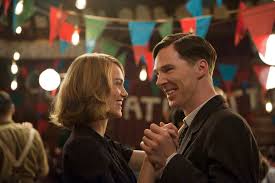 This duo reminds us that love can form in the most unusual
ways, even after everything has been taken away with you. Joan is the first
character that Alan is enamored by, evident through the extra efforts made to
get close-up shots of Alan’s face when he speaks to her. This is done primarily
to emphasize how Alan is truly affected by Joan – she opens him up to his team
(especially evident in the scene in which he brings them apples and attempts to
tell a joke, had me laughing on the floor!). The film develops to show how Alan
learns to becomes a family with his team, which was most clear the day that the
individuals cracked ENIGMA. This scene focused on Turing amidst the action that
was going on around him. The camera zoomed in on Alan’s face to show the
vulnerability that was present – the emotional bond that we hadn’t been able to
see before. This is underscored through the eye-line matches and reaction shots
that take place between Turing and the other characters (specifically Hugh). This
scene focalizes the scene into a subjective point of view – underscoring the
idea that not only had Alan broken barriers by cracking the code, but he had
also broken the barriers he had held up to separate himself from the rest of
the world. The film does a great job of using cinematic elements to parallel
both the plot’s development and Alan’s development.
This duo reminds us that love can form in the most unusual
ways, even after everything has been taken away with you. Joan is the first
character that Alan is enamored by, evident through the extra efforts made to
get close-up shots of Alan’s face when he speaks to her. This is done primarily
to emphasize how Alan is truly affected by Joan – she opens him up to his team
(especially evident in the scene in which he brings them apples and attempts to
tell a joke, had me laughing on the floor!). The film develops to show how Alan
learns to becomes a family with his team, which was most clear the day that the
individuals cracked ENIGMA. This scene focused on Turing amidst the action that
was going on around him. The camera zoomed in on Alan’s face to show the
vulnerability that was present – the emotional bond that we hadn’t been able to
see before. This is underscored through the eye-line matches and reaction shots
that take place between Turing and the other characters (specifically Hugh). This
scene focalizes the scene into a subjective point of view – underscoring the
idea that not only had Alan broken barriers by cracking the code, but he had
also broken the barriers he had held up to separate himself from the rest of
the world. The film does a great job of using cinematic elements to parallel
both the plot’s development and Alan’s development.
The bond is essential to the film.
Towards the end of
the film, Turing undergoes a tragedy in which he is forced to take hormonal
therapy in order to “cure” his “condition” (homosexuality). The ending is
bittersweet, as Alan turns the light off after staring at ‘Christopher’ (the
machine). His decision to turn the light off symbolizes that he no longer needs
the machine, a mere tangible representation of Christopher, in his life because
he has learned to accept and hold the best parts of Christopher within his
heart. The most touching scene in this film is the last interaction between
Alan and Joan, in which Joan tells Alan what he had told her when they first
met: “Sometimes it’s the very people who no one imagines anything of who do the
things no one can imagine.” A series of eye-line matches take place, and the
camera focuses on casting light upon the tears that form on Alan’s face.
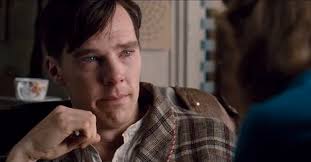

This final exchange symbolizes the trickle of hope that remains in Turing’s life even after he feels completely lost. Although I later discovered that Alan Turing truly did end up committing suicide, I could not call it a tragedy.
This final exchange symbolizes the trickle of hope that remains in Turing’s life even after he feels completely lost. Although I later discovered that Alan Turing truly did end up committing suicide, I could not call it a tragedy.
We can call this film
a lot of different things. A touching tale. A dramatic piece. A social
commentary. Whatever it may be, I finish the film remembering the one quote
that had me in tears by the end of the film:
“Sometimes it’s the
very people who no one imagines anything of who do the things no one can
imagine.”

the way you explain movies almost makes me feel like I have seen the movie myself and the insiders of why the plot is set up the way it is and all of the cinematic and dramatic elements combined that make the movie into what it is! very well done Ifrah :) -ashton
ReplyDeleteIfrah this is perfect, you explain it so clearly! I love how Benedict cumberbatch is once again playing the "awkward genius" kind of like Sherlock. I really enjoyed reading your interpretation of everything in the movie, I could tell that you had put a lot of thought into it. Also I love how well you could analyze this movie and describe different scenes. Great job!!! --libby
ReplyDeleteWow, every literary and cinematic analysis you do amazes me. This is definitely not an exception. I can feel your passion while you describe each character and go into intense detail about the cinematic elements involved in developing each character. The combination of framing, lighting, and sound to discuss different scenes was flawless. The transitions were smooth and I could follow the story easily without losing your interpretation. Your points were clear and full of energy. I can't wait to watch this film now! Phenomenal job. - Carlee
ReplyDelete